This article may contain affiliate links. If you buy through them, Simply At Home may earn a small commission at no extra cost to you. Learn more.
Buy the screwdrivers first. If you own nothing at all and want a place to start, a decent set of screwdrivers handles more household problems than any other tool, and it will handle them for the rest of your life. Everything else on this list is built around that.
I kept my tools in a plastic grocery bag under the sink for two years after I moved out on my own. It was not that I could not afford a box, it was that I never counted the hunting as part of the job. Once I put everything in one place, the small repairs around the house stopped piling up, because the barrier had never been the repair.
The core, in the order I would buy it
- Screwdrivers. Phillips and flat, at least two sizes each. Get real ones with comfortable handles rather than a novelty multi bit tool that rounds off screw heads.
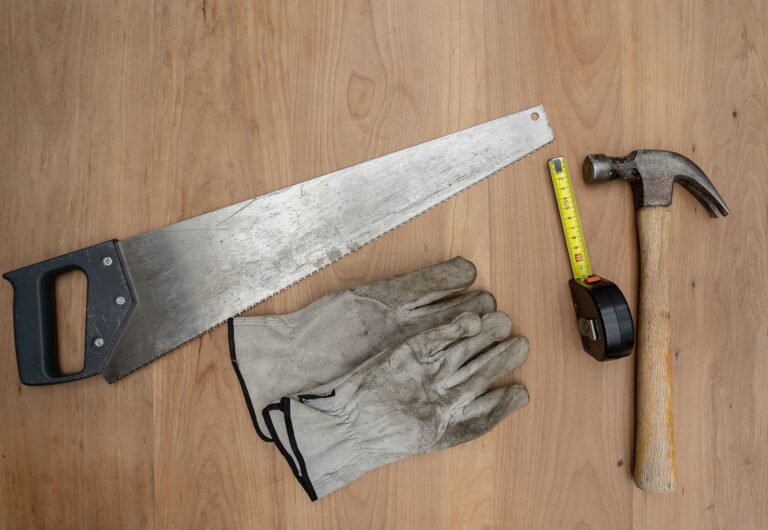
- Tape measure. Sixteen feet is plenty for interior work. A stiff blade that stays extended without collapsing is worth the small extra cost.
- Adjustable wrench. One medium size covers most nuts and fittings you will meet.
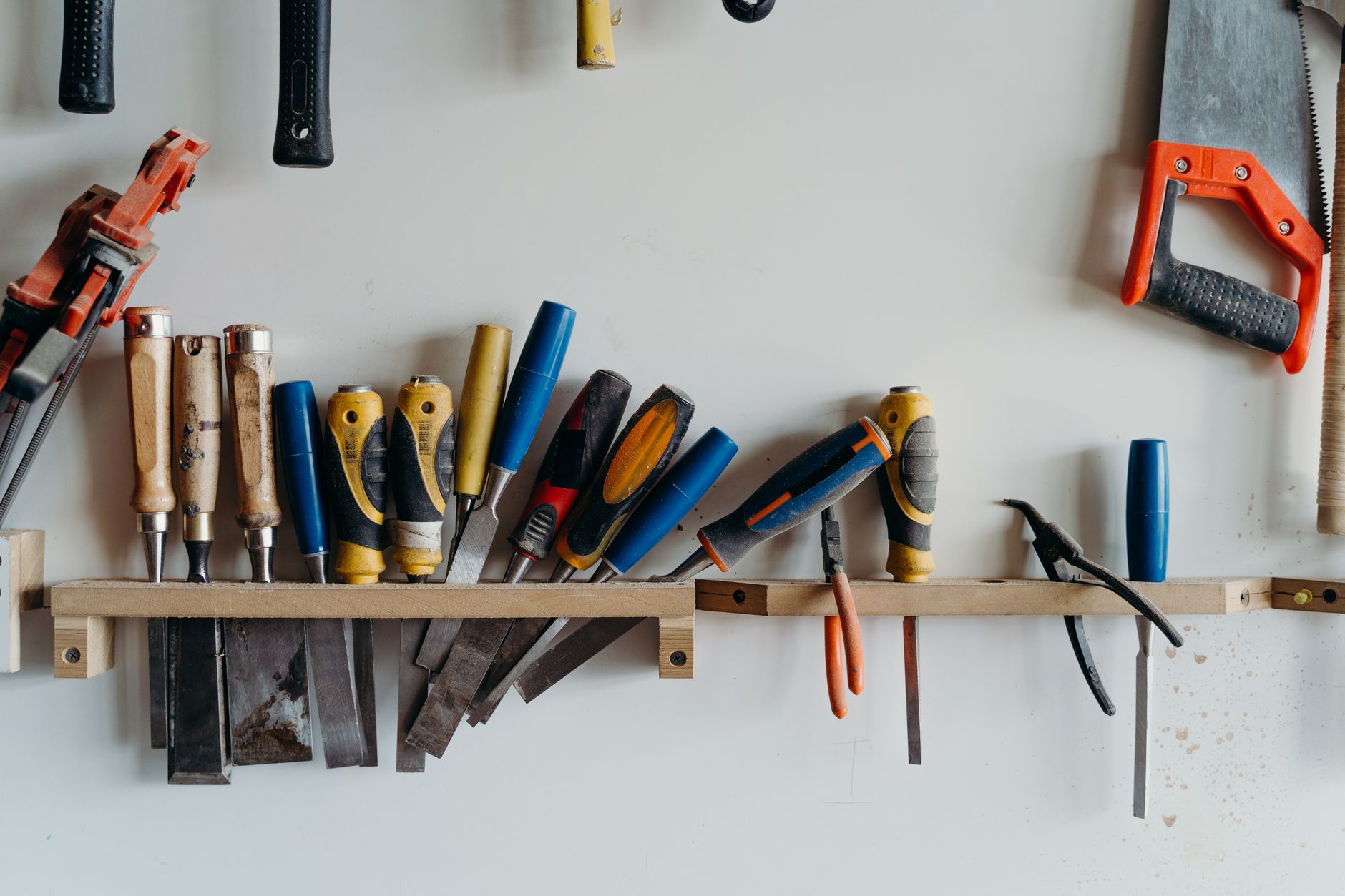
- Pliers. Two pairs. Slip joint for general gripping, needle nose for anything small or awkward, which in practice means anything behind or under something else.
- Utility knife. With spare blades. A dull blade causes more injuries than a sharp one because it slips.
- Hammer. A sixteen ounce claw hammer is the standard for a reason. Anything lighter fights you on real nails.
- Level. A short one, nine inches or so, lives in the box. A longer one is nice later.
- Stud finder. The single tool that most changes what you are willing to hang on a wall.
That set, in one box, is enough for hinges, hardware, furniture assembly, hanging, and most of what goes wrong in a rental.
Consumables, which matter as much as the tools
Tools do not run out. Supplies do, always mid job, usually on a Sunday.
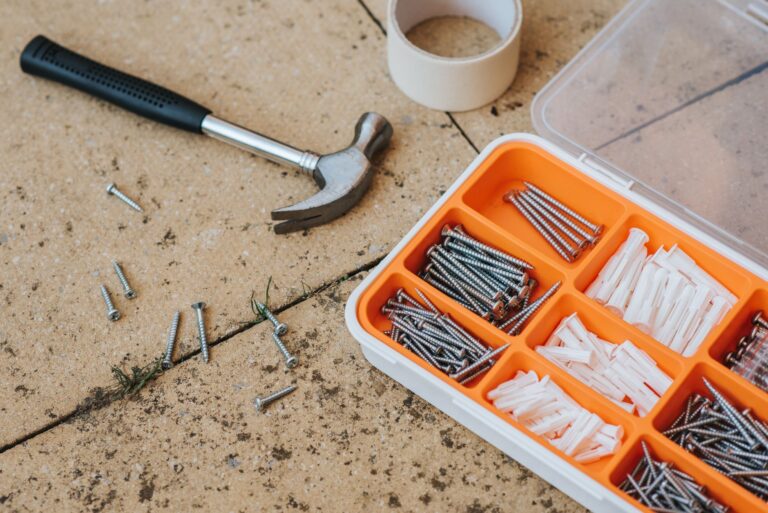
- Assorted screws in a divided box, wood screws in two or three lengths plus a handful of machine screws for cabinet hardware.
- Wall anchors, particularly strap or winged toggles rather than the small tapered plugs.
- Painter’s tape, which marks measurements, protects surfaces, and holds things while glue sets.
- Lightweight spackle and a flexible putty knife.
- Sandpaper in medium and fine.
- Wood glue and a tube of clear silicone or acrylic caulk.
- Thread locker in the removable blue formula, for hardware that keeps loosening.
- A dry lubricant such as a candle stub or paraffin, plus a small tub of petroleum jelly for hinge pins.
The one power tool
A cordless drill and driver is where I would spend money after the basics. Get one with an adjustable clutch so you can set it low and stop stripping screws, and buy a combination bit set with drill bits and driver bits in the same case. Two batteries if the budget allows, because a dead battery ends a project as completely as a missing tool does.
What I would not buy early: an oscillating tool, a circular saw, a nail gun. They are excellent tools and they solve problems most households do not have. Rent or borrow when a project genuinely needs one.
Where the box lives
This is the part that decides whether you use any of it. A toolbox in the garage under a shelf is a toolbox you will not open for a leaking faucet handle at nine at night. Mine sits in the hall closet at the center of the house, on the floor where I can reach it without moving anything.
I also keep a very small second kit in a kitchen drawer: one Phillips screwdriver, one flat, needle nose pliers, a tape measure, and a pencil. Those five cover about seventy percent of the small things that come up, and having them within reach means the loose knob gets tightened while I am standing there instead of joining a list.
The tool you can reach in ten seconds gets used. The one two rooms away gets replaced by a butter knife.
Safety supplies, briefly
Safety glasses, work gloves, and a dust mask cost little and belong in the box rather than in a drawer somewhere. I wear the glasses for anything overhead and anything that involves striking, drilling, or cutting. It took one flake of old paint in my eye while unscrewing a light fixture to make that a habit.
Also worth keeping nearby: a flashlight or a headlamp with working batteries, and the location of your water shutoff and your electrical panel written down somewhere you can find in a hurry. Knowing how to stop water and power is a bigger safety asset than any tool on this list.
What this kit does not cover
Owning tools does not expand the boundary of what is sensible to do yourself. Electrical work beyond changing a light fixture or a switch cover belongs with a licensed electrician, and in many places that is the law rather than an opinion. Anything involving gas lines, water supply lines behind walls, or a main drain belongs with a plumber. Structural changes belong with a contractor.
The kit above is for the enormous middle ground: the loose hinge, the wobbling chair, the shelf that needs hanging, the drawer that sticks, the ding in the hallway, the towel bar that pulled out of the wall. That middle ground is where almost all household wear actually lives, and having it covered in one box within reach changes how a house feels to live in.