This article may contain affiliate links. If you buy through them, Simply At Home may earn a small commission at no extra cost to you. Learn more.
Empty the shelf before you buy the bin. That is the whole method, and I learned it the expensive way, with a stack of tall acrylic canisters that turned out to be an inch too tall for the middle shelf of my pantry. They sat in the hallway in their box for three weeks before I admitted the mistake and drove them back to the store. Now I reset the pantry twice a year, once in late winter and once at the end of summer, and I do not buy a single container until the shelves are bare and measured.
My pantry is not a walk in. It is a closet with four fixed shelves, roughly twenty inches deep, in a kitchen that was last renovated well before I was born. Depth is the real problem in a space like that. Things migrate to the back and stop existing. Most of what I call organizing is just hauling the back of the shelf into the light twice a year and making a decision about what I find there.
Take everything out, including the things you know are fine
The temptation is to work shelf by shelf and leave the obvious keepers in place. I have tried it that way and it never works, because the whole point is to see the volume of what you own all at once. Half a pantry looks manageable. The entire pantry spread across a kitchen table and two chairs looks like what it is, which in my case was five open boxes of the same pasta and three jars of ground cumin.
I clear the table first, put down an old towel, and pull the pantry out in layers from the top down. It takes about fifteen minutes. Anything sticky or leaking gets set on the counter instead of the table so it does not spread. If you have a dog in the house, close the kitchen door, because food at floor level on a towel is an open invitation.
Sort into four piles, not ten
Four piles is the most I can hold in my head while I am also holding a bag of lentils. Keep, donate, toss, and relocate. Relocate is the pile that matters more than people expect. Mine usually holds birthday candles, a roll of packing tape, two dog treats, and a phone charger, all of which drifted into the pantry because it is the closest closet to the back door.
- Keep is anything unopened and in date, plus anything opened that I will genuinely finish in the next month.
- Donate is unopened, in date, and something I bought with good intentions and never touched. The chickpea pasta lands here every single time.
- Toss is expired, stale, or opened and forgotten. Dry goods past their date are usually still safe but flat tasting, and flat tasting food does not get cooked.
- Relocate is everything that is not food.
I do not agonize over dates on spices, salt, or sugar. I check them by smell and by look. Ground spices lose their punch after about a year, whole spices hold much longer, and if I open a jar and get nothing at all, it goes.
Wipe the shelves while they are empty
This is a two minute job that never happens at any other point in the year. Warm water, a drop of dish soap, a microfiber cloth, and a dry cloth behind it so the shelf is not damp when things go back. If your shelves are unfinished wood or old melamine with chipped edges, keep the cloth barely damp. Standing water swells particleboard and you cannot undo that.
I run the vacuum hose along the back corners while I am in there. Flour and rice always end up in the back seam of the bottom shelf, and if you leave it long enough you eventually get pantry moths. I fought pantry moths once, in an apartment with a shared wall, and I would rather vacuum a seam twice a year than do that again.
Put things back by how often you reach for them
Not by category, and not by size. By frequency. Category sorting looks tidy in a photo and falls apart in a real week, because baking supplies are not one behavior, they are three. The flour you use weekly and the cake sprinkles you use twice a year do not belong in the same zone just because they share a theme.
Eye level and the shelf just below it
Everything I touch more than twice a week. Olive oil, salt, coffee, pasta, canned tomatoes, peanut butter, the box of tea. This is prime real estate and I am ruthless about it. If something sits at eye level untouched for a month, it gets demoted at the next reset.
The top shelf
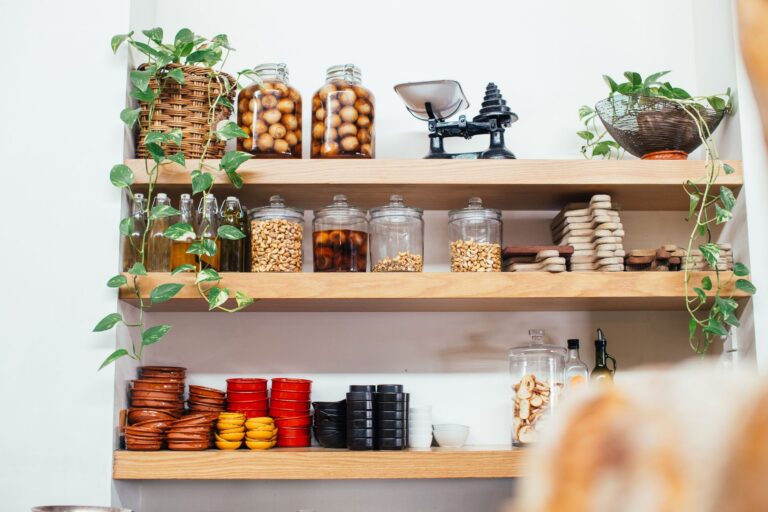
Light, occasional, and forgiving if it falls. Paper napkins, the spare bag of coffee filters, popcorn kernels, the picnic plates. Nothing heavy and nothing glass goes above my shoulder. That rule came directly out of a jar of honey that did not survive a reach on tiptoe.
The floor and the bottom shelf
Heavy and bulk. The big bag of rice, the flour bin, canned goods in a low open crate I can slide out with my foot. Anything I have to lift with two hands belongs down low so my back is doing the work in the right direction.
Now, and only now, measure for containers
With the shelves loaded the way you actually want them, you can finally see the gaps. Write down three numbers for each gap: shelf width, shelf depth, and the clear height from one shelf to the next. Height is the number that catches people, mine included. Fixed shelves rarely give you more than eleven or twelve inches of clearance, and plenty of attractive canisters are taller than that.
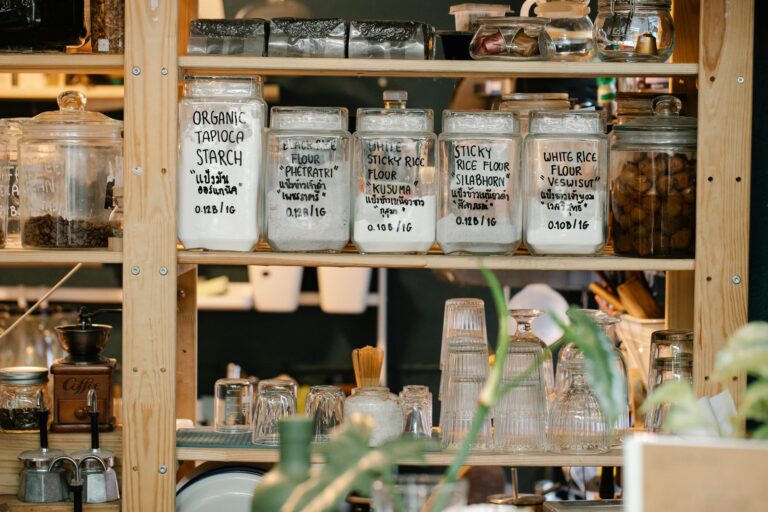
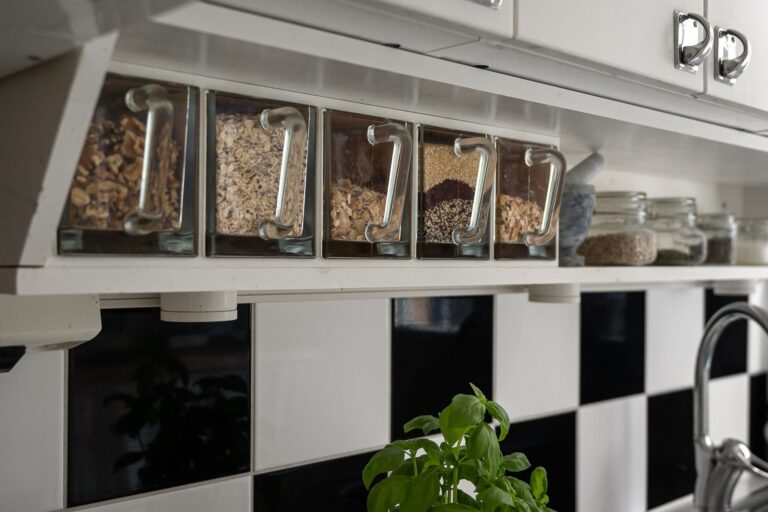
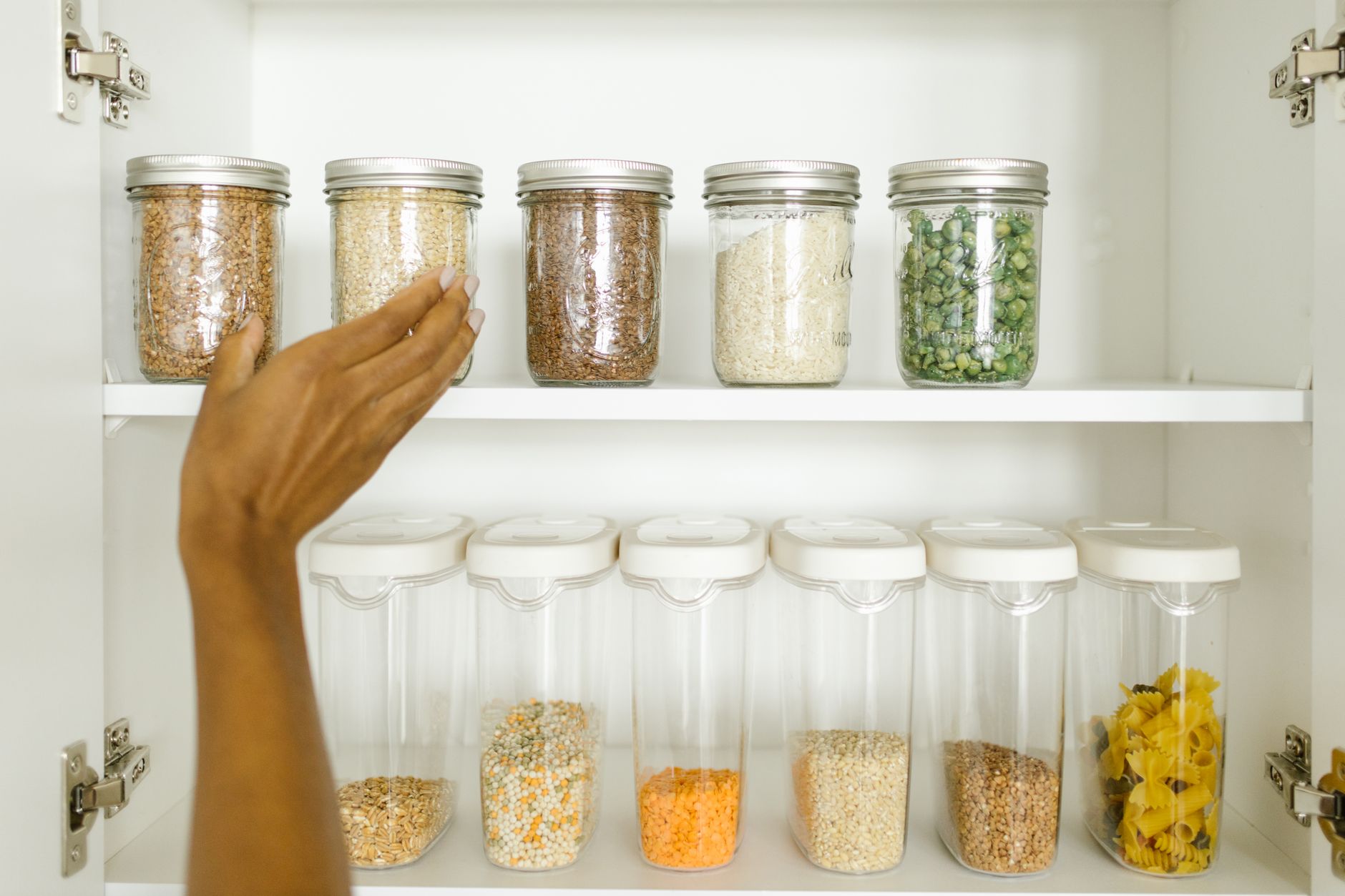
Then decide whether you need containers at all. My honest answer, after several rounds of this, is that I need three kinds and nothing else. A low open bin for packets and small bags so they stop flopping over. A tall narrow bin for anything that would otherwise fall behind something taller. And two airtight jars for flour and sugar, because those two go stale and attract pests faster than anything else I keep.
The container does not organize anything. It just holds the decision you already made about where something lives.
The list taped inside the door
I keep a strip of masking tape and a pencil stub on the inside of the pantry door. When I open the last of something, I write it down right then, with the empty box still in my other hand. Not later, not on my phone. This single habit has done more for my grocery shopping than any app I have tried, and it is the reason I no longer own five boxes of identical pasta.
At the end of a reset I write the date on that same strip of tape. It tells me at a glance how long it has been, and it stops me from doing this more often than the shelves actually need.
What I stopped doing
I stopped decanting everything. Cereal in a canister means I lose the cooking instructions and the date, and I have to wash and fully dry a large container every time it empties. Now I decant only what genuinely benefits, which for me is flour, sugar, oats, and rice.
I also stopped labeling in a way that assumes the pantry will never change. Chalk markers smear the moment a damp hand touches them, and printed vinyl labels lock a jar into one job forever. Masking tape and a pencil peels off clean and costs nothing to redo.
How long it actually takes
Ninety minutes for a closet pantry, start to finish, as long as you do not stop to reorganize the whole kitchen while you are in there. Fifteen minutes to empty, twenty to sort, five to wipe, thirty to put back, and the rest for the donation bag and the trip to the bin. Twice a year, so three hours annually. That is a small price for a pantry where I can see everything I own from the doorway.
If ninety minutes is not available this week, do one shelf. Take it all out, wipe it, put back only what belongs at that height, and stop. One shelf done properly beats four shelves shuffled around.
The first grocery run after a reset
Go smaller than feels right. A reset leaves gaps, and gaps make me want to fill them, which is exactly how the pantry got crowded the first time. I do one ordinary week of groceries and let the shelves look a little sparse. By the second week I can tell what I truly reach for and what I only bought because there was room for it. That is the information the whole reset was for.