This article may contain affiliate links. If you buy through them, Simply At Home may earn a small commission at no extra cost to you. Learn more.
Buy a second set of sheets for every bed and most of your sheet problems disappear. That is the whole trick, and it took me an embarrassingly long time to act on it. For years I washed sheets on a Saturday morning, and then the rest of the day was hostage to whether they would be dry by bedtime. Sometimes they were not, and I would be remaking a bed at eleven at night with sheets still slightly cool and damp at the seams.
Two sets means the bed gets made immediately with the clean set, and the dirty set goes in the wash whenever it is convenient. The laundry stops being urgent. I keep two sets per bed and no more than two, because three sets is where a linen closet starts eating itself.
How often to wash sheets
Every week for the bed you sleep in. Every other week for a guest bed nobody has used, mostly to keep dust out of them. That is my standard and I do not agonize about it.
The variables that push toward more often:
- Anyone sleeps hot or sweats at night.
- A pet sleeps on the bed. My cat does, and I can tell by the pillowcases.
- Anyone has allergies, in which case pillowcases specifically benefit from twice a week.
- You go to bed without showering after a physical day.
Pillowcases are the piece worth being strict about. They take skin oils and hair product every night, and they are also the cheapest thing to swap. I keep four extra pillowcases that match nothing in particular and rotate them midweek.
Washing sheets without wrecking them
Sheets are large, light, and prone to tangling, which makes them different from almost everything else you wash.
Wash one bed’s set at a time. Two sets in a drum means the top sheet of one wraps around the fitted sheet of the other and forms a rope, and the inside of that rope never really gets washed or rinsed. This is the single most common reason sheets come out of a wash still smelling like the bed.
Shake each piece out as it goes in. Do not put a wadded fitted sheet into the drum. Open it, then drop it in loosely.
Warm water for cotton, cold for anything with elastane or a special finish. Hot water on a weekly basis breaks down the elastic in fitted sheet corners faster than anything else, and a fitted sheet with dead elastic is done even if the fabric is perfect.
Skip the fabric softener. Same reasoning as towels. Cotton sheets get softer with washing on their own. Softener coats the fibers, reduces breathability, and makes percale sheets feel oddly slick.
Use a normal detergent dose. Sheets are large but not heavily soiled. Overdosing detergent on sheets leaves residue that feels like grit at the foot of the bed.
Almost everything that goes wrong with sheets in the wash comes from putting too much in the drum at once. Give one set the whole machine and the rest sorts itself out.
Drying, and the case for pulling them early
I dry sheets on medium and I pull them while they are still barely warm and just a shade short of bone dry. Then they go straight onto the bed. The residual warmth relaxes the wrinkles as it finishes drying in place, and I never touch an iron.
If you cannot make the bed right then, pull them at the same point and drape them over a door or a drying rack rather than leaving them in the dryer to cool into a compressed ball. Sheets set their wrinkles hard when they cool in a heap.
Line drying sheets outdoors is genuinely lovely and I do it when the weather allows. Two cautions from experience: bring them in before evening damp settles, and do not line dry colored sheets in full afternoon sun repeatedly, because they fade in stripes where the fabric folds over the line.
Making the bed so it stays made
A few mechanics that made a real difference in my house.
- Find the tag. On most fitted sheets the tag sits at a foot corner, which tells you the sheet’s long side instantly. I stopped fighting fitted sheets the day I started looking for the tag first.
- Do the two far corners first. Both corners on the side away from you, then walk around. Doing near then far means untucking what you just tucked.
- Deep pockets for a mattress topper. If you added a topper and your fitted sheet now pops off in the night, the sheet is not defective. It is too shallow. Measure the mattress and topper together and buy for that number.
- Sheet straps or suspenders under the mattress work well on beds where the fitted sheet keeps migrating. They are not elegant but nobody sees them.
Storing sheets without the closet exploding
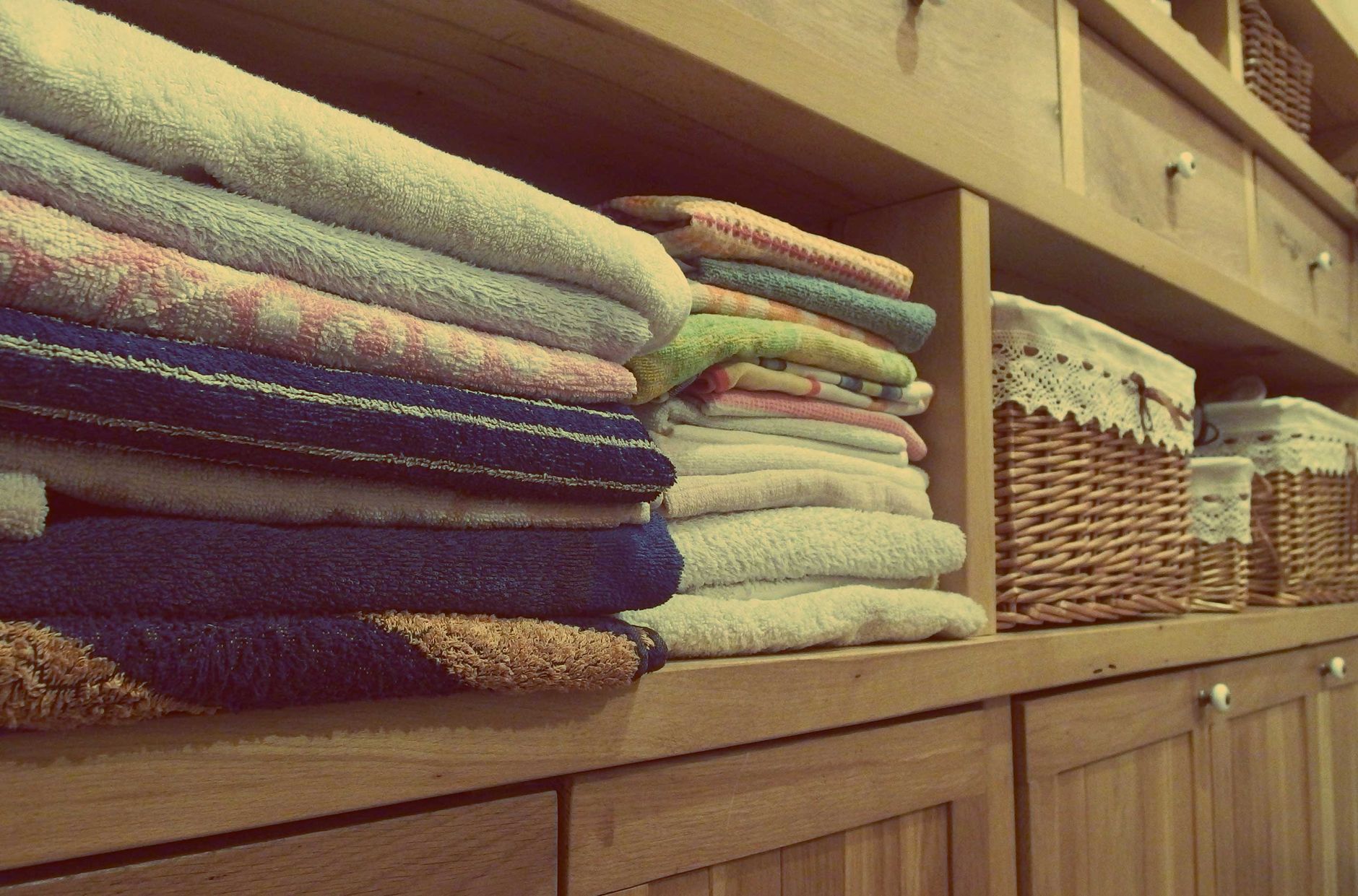
The folded-inside-the-pillowcase method is the one that stuck for me. Fold the flat sheet, the fitted sheet, and the extra pillowcase, then slide the whole bundle into the remaining pillowcase. Now a set is one object. Nobody unstacks four things looking for a matching fitted sheet, because there is nothing to unstack.
Label the bundle if you have more than one bed size. I write the size on a strip of masking tape stuck to the shelf edge rather than on the linens, so I can move things around without peeling anything off fabric.
Keep the linen closet dry and give it airflow. Sheets stored in a sealed plastic bin in a humid closet come out smelling like the bin. I use open shelves and I leave a gap at the back.
What sheets are worth caring about
Thread count stopped meaning much to me once I understood weave. Percale is a plain weave, crisp, cool, gets a lived-in softness after ten or fifteen washes. Sateen is a satin weave, smoother and warmer feeling, drapes more. Linen is loose and textured, feels rough at first and then becomes the most comfortable thing in the closet, and it wrinkles permanently no matter what you do, which you either accept or you do not buy linen.
I sleep hot, so I run percale most of the year and keep one flannel set for the coldest six weeks. My guest bed has sateen because guests seem to like it and it looks better made up.
What actually predicts how long a set lasts, in my experience, is the elastic in the fitted sheet and the quality of the hems. Both of those are visible before you buy. Turn the sheet over in the store and look at whether the elastic runs all the way around the fitted sheet or only across the two ends. All the way around lasts longer and stays put better.
The pilling question
If your sheets are pilling, three usual causes. Cheap short staple cotton, which you cannot fix. Washing with towels or anything abrasive like zippers and denim, which you can fix by washing sheets alone. Or over drying at high heat, which you can fix by turning the dryer down.
A fabric shaver takes the pills off and buys you a season or two, but it is thinning the fabric each time you use it. I do it once on a set and then accept whatever comes next.
Two sets per bed, one set per wash, pull them slightly damp, and make the bed right away. That is the entire system, and it has survived a move, a teenager, and a cat who thinks the duvet belongs to him.