This article may contain affiliate links. If you buy through them, Simply At Home may earn a small commission at no extra cost to you. Learn more.
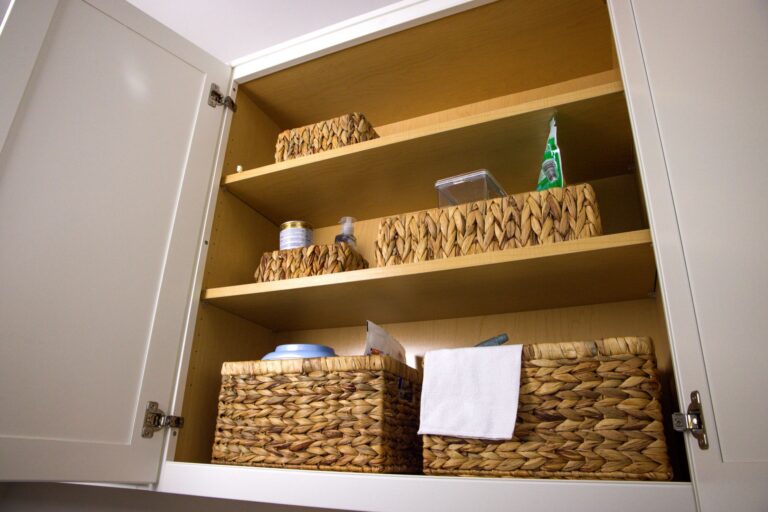
Measure the gap above your stuff before you decide you need more storage. In most cabinets and closets I have opened, including my own, there is four to nine inches of unused air sitting above whatever is on the shelf, multiplied across every shelf in the house. That air is the cheapest storage anyone has, and it costs nothing but a small amount of attention.
The reason it goes unused is that shelves are built at generic spacing and then never adjusted. A closet installed for one household gets inherited by the next, and the shelf heights stay wherever the builder put them, which is usually generous enough that nothing gets crushed and nobody complains.
Start by measuring the air
Walk one closet with a tape measure. For each shelf, measure the tallest item on it, then measure the shelf spacing, and note the difference. In my linen closet the numbers were fourteen inches of spacing over a stack of towels that reached eight, so six inches of nothing, on three shelves.
Do this before buying anything. The number tells you which fix applies, and there are only about four fixes worth knowing.
Fix one: move the shelf
If the shelves sit on adjustable pins or a track, this is free and takes ten minutes. Drop the lower shelves to snug spacing and you will usually find you can add a shelf at the top, or gain enough height on one shelf to store the tall awkward things that have been living on the floor.
Snug means about an inch of clearance above the stack, enough to get a hand in and lift without scraping. Any tighter and putting things away becomes a careful maneuver, which is how a shelf stops getting used correctly.
Fixed shelves that are nailed or built in are a different conversation, and for those the next three fixes apply.
Fix two: shelf risers
A riser is just a small platform that creates a second level within one shelf. It works best for items that are short and uniform: cans, jars, folded cloths, small boxes. It works badly for anything tall or irregular, because you lose the flexibility of one open bay.
The thing to watch is depth. A riser that is shallower than the shelf leaves an awkward strip behind it that collects things you cannot reach. Match the riser depth to the shelf, or accept that the strip behind will be dead space and put something long and rarely used there deliberately.
Fix three: stack in containers rather than stacking bare
Bare stacks have a height limit set by stability and by how many things you are willing to move to reach the bottom item. A stack of five folded blankets is functionally one blanket, because the other four are buried.
Two shallow bins side by side use the same air more usefully than one tall pile, because each bin is independently reachable. This is the trade that matters on a deep shelf: containers cost you a little capacity in wall thickness and buy you a lot of access.
Where I still stack bare is with things I use as a set, like extra bedding for one bed, since I pull the whole stack at once anyway.
Fix four: hang things on the vertical surfaces
The insides of cabinet doors, the side walls of a closet, and the wall above a shelf are all real storage that most houses ignore. What suits them is different from what suits shelves.
- Door interiors hold flat, light things: cleaning cloths, small tools, wrapping supplies, a slim rack for spray bottles. Check the door swing clearance first, because a rack that hits the shelf when the door closes is a problem you will discover loudly.
- Closet side walls take hooks well, and hooks are ideal for the long soft things that never stack neatly, such as bags and cords.
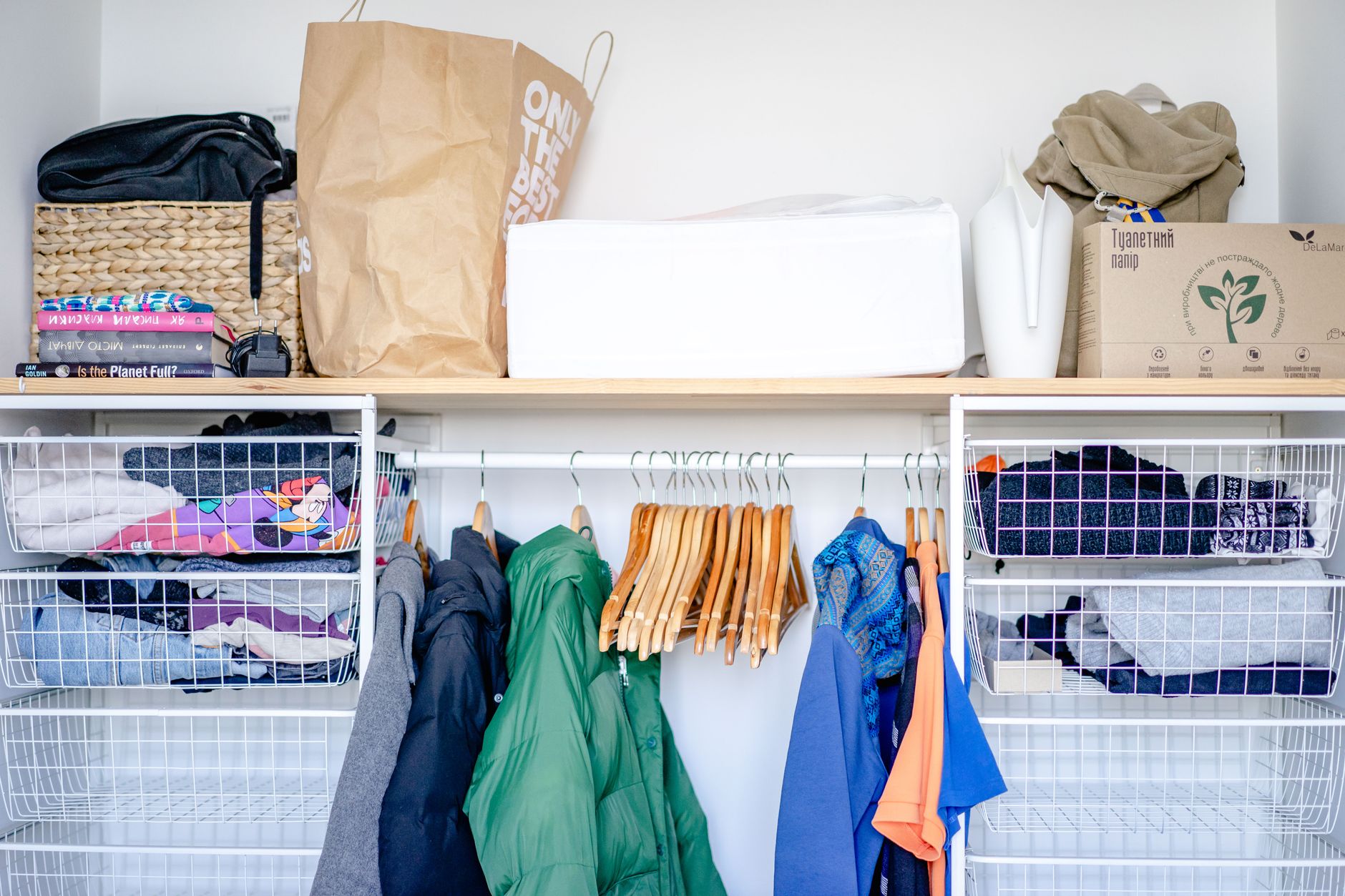
- The wall above a shelf takes a narrow ledge or a second shelf, and this is the highest value change in a closet with only one shelf and a rod.
In my hallway I put four hooks on the inside wall of the coat closet, and the reusable shopping bags that had been living in a heap on the cabinet floor moved there permanently. That was a two dollar fix for a problem I had been trying to solve with baskets for a year.
Storage problems that look like a shortage of space are often a shortage of surfaces. Shelves are only one kind, and every closet has three or four others already built in.
What belongs up high, and what does not
Gaining vertical space is only useful if you assign the right things to it. The rule I follow is simple: frequency drops as height rises.
Eye level to hip level is prime, and it should hold what you touch weekly. Below the knee is fine for heavy things you use occasionally, since lifting heavy items low is safer than lifting them down from overhead. Above shoulder height is for light, seasonal, and rarely needed things only.
Never put anything heavy above shoulder height, no matter how neatly it fits. I keep a folding step stool in the hall cabinet because the top shelves in this house are genuinely out of reach for me, and having the stool nearby is the difference between using those shelves and treating them as decorative.
The under furniture check
The same measuring exercise applies to the space under things. Beds, sofas, and consoles all sit on some amount of air, and the height of that air determines what fits. Measure it and write it down before you buy anything sized to go there, since three inches and seven inches are entirely different storage situations.
The one caution is that low, hidden space collects dust and gets forgotten. What goes there should be enclosed, and it should be things you genuinely retrieve on a schedule. Otherwise the space becomes a place where objects go to be quietly abandoned, and you will find them the next time you move.
Do this first
Open the closet that annoys you most, and measure the gap between the top of your stuff and the shelf above it. If that gap is more than four inches on any shelf, you have found storage you already own. Adjust the shelf if you can, add a riser or a second bin level if you cannot, and put hooks on one vertical surface you have been ignoring.
None of this requires a renovation or a matched set of anything. It requires the tape measure and a willingness to look up.